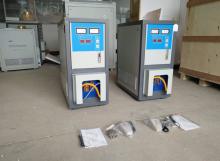
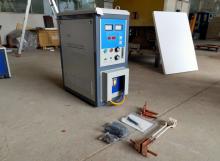
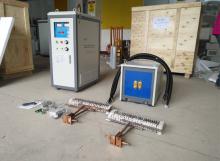
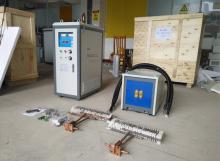
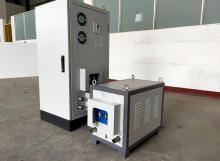
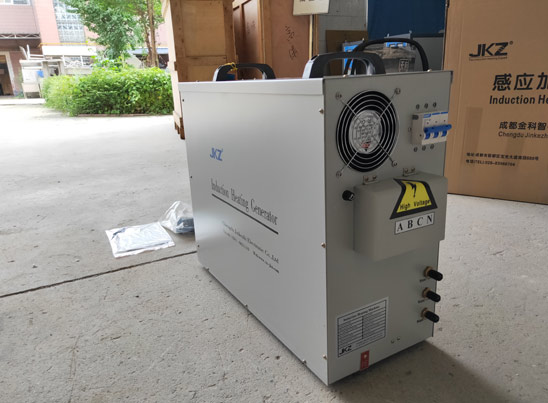
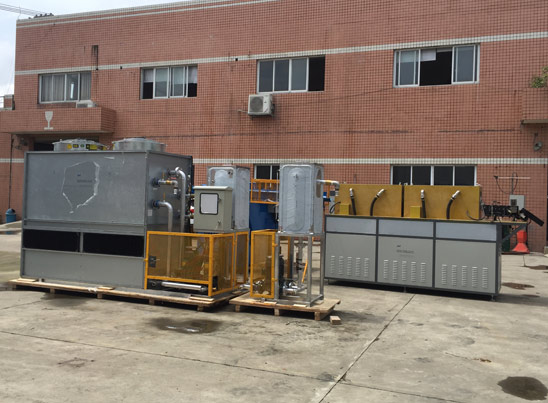
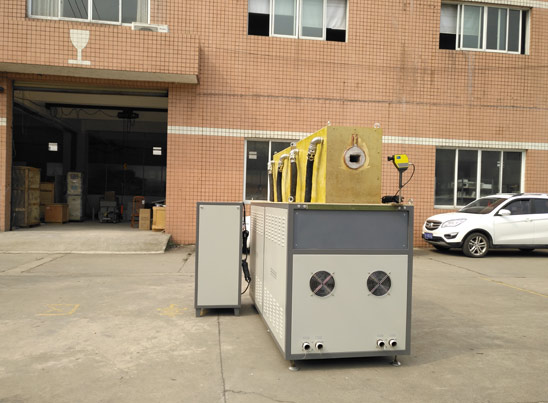
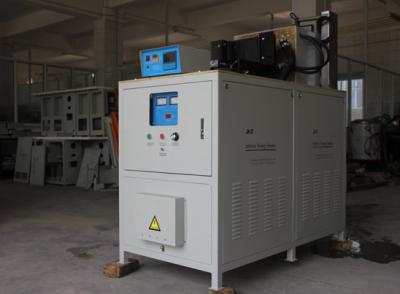
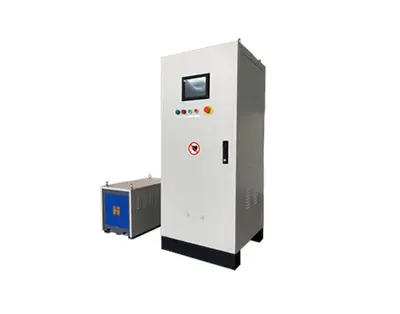
In the wave of modern industrial production, industrial induction melting machines have become reliable assistants in fields such as metal processing and electronic component manufacturing, thanks to their unique heating methods and high energy conversion efficiency. JKZ induction heating writes this article will take you through an in-depth understanding of the working principle of industrial induction melting machines and explore the technological mysteries behind them.
Working Principle of Industrial Induction Melting Machines
As the name suggests, an industrial induction melting machine is a device that uses a high-frequency electromagnetic field to heat conductive materials. Its working principle is based on the phenomenon of electromagnetic induction. When a high-frequency power source generates a high-frequency electromagnetic field, this field will pass through the heating material, creating eddy currents within the material. The magnitude of these eddy currents depends on the conductivity of the material and the strength of the magnetic field. When the eddy currents pass through the heating material, they generate a damping effect, converting electrical energy into heat energy, thus heating the material.
The specific working process of an industrial induction melting machine can be divided into the following steps:
1. The high-frequency generator generates high-frequency current: The high-frequency generator is the core component of the industrial induction melting machine. It can generate high-frequency current, typically ranging from a few kilohertz to several hundred megahertz, which can be adjusted according to different heating requirements.
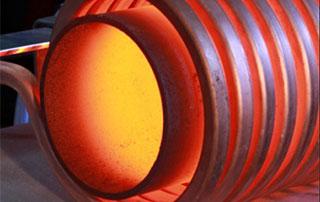
2. High-frequency current is transmitted to the induction coil: The high-frequency current is transmitted from the output transformer to the workpiece surface via the induction coil. The induction coil is another key component of the industrial induction melting machine, made of conductive material, usually in a ring or spiral shape. When high-frequency current passes through the induction coil, a strong magnetic field is created around it.
3. The magnetic field induces eddy currents on the workpiece surface: When the workpiece is placed in the magnetic field generated by the induction coil, the conductivity of the workpiece surface will create eddy currents. The direction of these eddy currents is opposite to that of the current in the induction coil, forming a closed loop within the workpiece. The size and distribution of the eddy currents depend on factors such as the conductivity, shape, and size of the workpiece, and the strength of the magnetic field.
4. Electrical energy is converted into heat energy to heat the workpiece: As the eddy currents flow inside the workpiece, they encounter resistance, which generates heat. This heat raises the temperature of the workpiece, achieving the purpose of heating. Since the eddy currents are generated inside the workpiece, the industrial induction melting machine can achieve rapid and uniform heating.
Technical Advantages of Industrial Induction Melting Machines
As an advanced heating device, industrial induction melting machines have the following technical advantages:
Rapid heating: Because induction heating machine directly heats workpieces using electromagnetic induction, the heating speed is very fast. Compared to traditional heating methods, industrial induction melting machines can heat workpieces to the required temperature in a shorter time.
High efficiency: The energy conversion efficiency of industrial induction melting machines is very high, almost completely converting electrical energy into heat energy. This means that for the same heating effect, industrial induction melting machines consume less electrical energy, thereby reducing production costs.
Energy-saving and environmentally friendly: During the heating process, industrial induction melting machines do not produce open flames, smoke, or harmful gases, meeting environmental protection requirements. At the same time, due to their high energy conversion efficiency, industrial induction melting machines significantly reduce energy consumption during operation, achieving energy saving and emission reduction.
Uniform heating: Because eddy currents are generated inside the workpiece, industrial induction melting machines can achieve uniform heating. This helps avoid localized overheating or uneven temperatures during the heating process, improving product quality.
High flexibility: Industrial induction melting machines can be adjusted and optimized according to different heating needs, such as changing the frequency of the high-frequency current and adjusting the shape and size of the induction coil. This allows industrial induction melting machines to adapt to various complex heating process requirements, improving production flexibility.
Application Areas of Industrial Induction Melting Machines
Industrial induction melting machines are widely used in metal processing, electronic component manufacturing, plastic processing, wood drying, and other fields. For example, in metal processing, industrial induction melting machines can be used for welding, quenching, tempering, and other processes; in electronic component manufacturing, they can be used for packaging, hot pressing, and other processes; in plastic processing, they can be used for thermoforming, heat sealing, and other processes; in wood drying, they can be used for fast and uniform drying of wood.
In summary, as an advanced heating device, industrial induction melting machines play an important role in modern industrial production with their unique working principles and technical advantages. With the continuous advancement of technology and the development of industrial production, industrial induction melting machines will have broader application prospects.
 en
en  cn
cn  jp
jp  ko
ko  de
de  es
es  it
it  ru
ru  pt
pt  th
th  vi
vi  pl
pl 



 Call us on:
  Email Us:
  NO. 688th South Baoguang Road, Xindu District, Chengdu City, Sichuan Province, China