Manufacturers choose a medium frequency induction heating machine when they need efficient, uniform, and controllable heating for medium-to-large workpieces. Compared with conventional flame or resistance heating, medium frequency induction heating delivers faster heating rates, higher energy efficiency, improved temperature consistency, and cleaner production. It is widely used in hot forging, surface and through quenching, brazing, and metal melting because it offers precise power control, repeatable process quality, and lower operating costs.
Why Is Medium Frequency Induction Heating Ideal for Industrial Manufacturing?
The performance of medium frequency induction heating equipment makes it suitable for applications that require deeper heat penetration than high-frequency systems while maintaining excellent efficiency.
Key advantages include:
Uniform heat distribution throughout larger cross-sections
Faster heating with reduced oxidation and decarburization
High electrical efficiency through IGBT inverter technology
Accurate digital temperature and power control
Reduced energy consumption compared with fuel-fired furnaces
Easy integration into automated production lines
Environmentally friendly operation without open flames
These benefits make medium frequency induction heating a preferred solution for manufacturers seeking consistent product quality while lowering production costs.
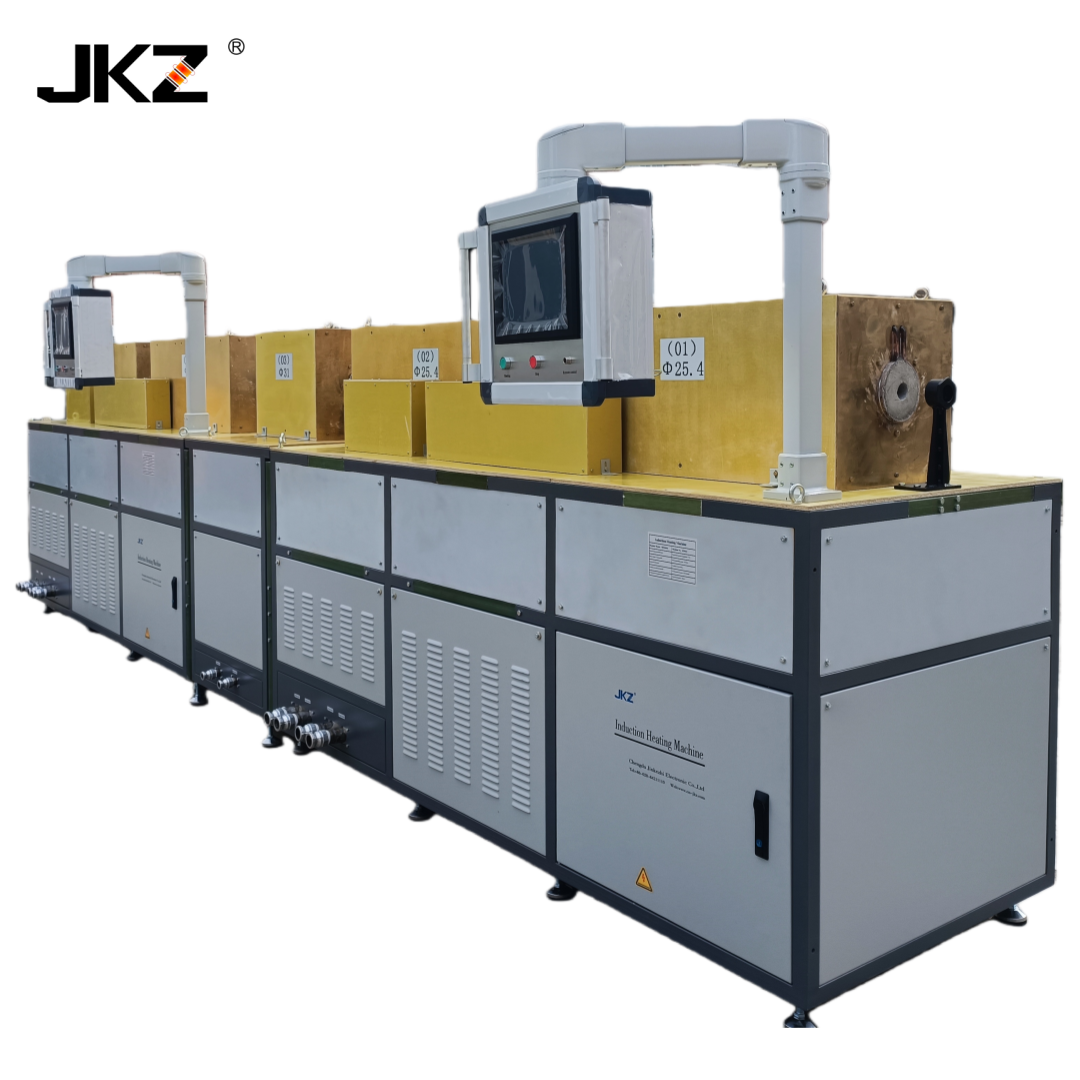
Why Is Medium Frequency Preferred for Forging Applications?
Hot forging requires billets or bars to reach precise forging temperatures without overheating the surface or leaving the core underheated. This is where a medium frequency induction heating machine offers significant advantages.
Consistent Billet Heating
Medium-frequency electromagnetic fields generate heat throughout the workpiece, producing:
Higher Production Efficiency
Compared with traditional gas furnaces, induction heating can:
Lower Material Loss
Accurate heating minimizes:
Oxidation
Scale formation
Decarburization
Material waste
These advantages are particularly valuable in forging industries producing automotive components, bearings, gears, flanges, shafts, and construction hardware.
How Does Medium Frequency Induction Heating Improve Quenching Quality?
Quenching quality depends on precise heating before rapid cooling. Medium frequency induction heating equipment provides excellent temperature control that directly improves hardness consistency.
Localized Heating
Manufacturers can selectively heat only critical areas, including:
Gear teeth
Bearing races
Shaft journals
Cam surfaces
Rollers
This reduces distortion while preserving toughness in non-treated sections.
Repeatable Heat Treatment
Modern induction systems provide:
PLC-controlled heating parameters
Automatic power adjustment
Programmable heating cycles
Stable process repeatability
As a result, manufacturers achieve:
What Metals Can Be Melted in a Medium Frequency Induction Furnace?
A medium frequency induction furnace is suitable for melting a wide variety of ferrous and non-ferrous metals.
Common materials include:
Ferrous Metals
Carbon steel
Alloy steel
Stainless steel
Tool steel
Cast iron
Non-Ferrous Metals
Copper
Brass
Bronze
Aluminum
Zinc
Silver
Gold
The electromagnetic stirring effect inside a medium frequency induction melting furnace improves alloy uniformity while reducing contamination.
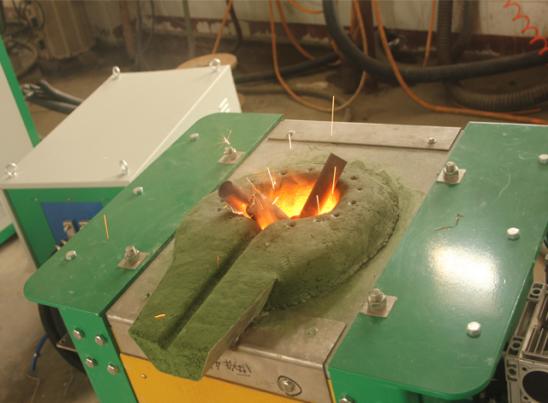
Why Is a Medium Frequency Induction Melting Furnace Efficient for Foundries?
Foundries increasingly replace fuel-fired melting systems with medium frequency induction melting furnaces due to their efficiency and process control.
Rapid Melting
Induction power transfers energy directly into the metal instead of heating furnace walls first.
Benefits include:
Better Metal Quality
The controlled melting process provides:
Stable alloy composition
Reduced oxidation
Lower gas absorption
Improved casting quality
Lower Energy Consumption
A medium frequency furnace minimizes heat loss because energy is generated directly inside the metal charge.
Which Industries Benefit Most from Medium Frequency Induction Heating?
Today, medium frequency induction heating is widely used across numerous industrial sectors.
Automotive Manufacturing
Applications include:
Gear hardening
Axle heating
Bearing heat treatment
Forging billets
Connecting rods
Aerospace
Used for:
Machinery Manufacturing
Ideal for:
Shaft quenching
Roll hardening
Tool heat treatment
Bearing production
Metal Casting
A medium frequency induction furnace supports:
Hardware Manufacturing
Suitable for:
How Does Medium Frequency Compare with High Frequency Induction Heating?
Selecting the correct medium frequency system depends primarily on workpiece size, heating depth, and production objectives.
| Feature | Medium Frequency | High Frequency |
|---|
| Heating Depth | Deeper penetration | Shallower penetration |
| Suitable Workpieces | Medium and large parts | Small precision parts |
| Forging | Excellent | Limited |
| Metal Melting | Excellent | Rarely used |
| Surface Hardening | Very good | Excellent for shallow hardening |
| Energy Efficiency | High | High |
For heavy forging, deep heat treatment, and melting applications, medium frequency induction heating equipment generally offers the best balance between heating depth and productivity.
What Should You Consider When Selecting a Medium Frequency Induction Heating Machine?
Choosing the right equipment involves more than matching power ratings.
Important considerations include:
Workpiece Dimensions
Larger parts require:
Greater heating depth
Appropriate coil design
Higher output power
Production Capacity
Evaluate:
Heating cycle time
Daily production volume
Automation requirements
Power Supply
Confirm compatibility with:
Process Requirements
Different applications require different configurations:
Forging
Quenching
Brazing
Annealing
Melting
An experienced equipment supplier can customize medium frequency induction heating equipment based on your production process.
Conclusion
Modern manufacturing increasingly relies on medium frequency induction heating machines because they combine speed, precision, and energy efficiency in one heating solution. Whether used for forging billets, surface quenching, or alloy melting, a properly designed medium frequency induction furnace delivers consistent temperatures, improved metallurgical quality, and lower operating costs.
For manufacturers seeking higher productivity, better product consistency, and reduced environmental impact, investing in advanced medium frequency induction heating technology is a practical long-term solution. Selecting the right medium frequency induction melting furnace or medium frequency furnace according to workpiece size, material type, and production capacity ensures reliable performance and maximum return on investment.
FAQ
What is the difference between a medium frequency induction furnace and a high-frequency induction furnace?
A medium frequency induction furnace produces deeper heat penetration, making it ideal for larger workpieces, forging, and metal melting. High-frequency systems generate shallower heating and are better suited for small precision components requiring surface hardening.
Can a medium frequency induction heating machine melt stainless steel?
Yes. A medium frequency induction melting furnace can efficiently melt stainless steel, carbon steel, alloy steel, cast iron, copper, aluminum, brass, bronze, and many other ferrous and non-ferrous metals.
Is medium frequency induction heating energy efficient?
Yes. Because energy is generated directly within the workpiece through electromagnetic induction, medium frequency induction heating significantly reduces heat loss compared with conventional gas-fired or resistance heating systems, resulting in lower operating costs.
Which industries commonly use medium frequency induction heating equipment?
Major users include automotive manufacturing, aerospace, foundries, machinery manufacturing, metal processing, hardware production, mining equipment manufacturing, and heat treatment service providers.
How long does a medium frequency induction heating machine typically last?
With proper maintenance, quality components, and correct cooling system management, industrial medium frequency induction heating equipment can provide reliable operation for many years while maintaining stable heating performance and production efficiency.
 en
en  cn
cn  jp
jp  ko
ko  de
de  es
es  it
it  ru
ru  pt
pt  th
th  vi
vi  pl
pl 



 Call us on:
  Email Us:
  NO. 688th South Baoguang Road, Xindu District, Chengdu City, Sichuan Province, China