Contact Us

How to Choose the Right Induction Melting Furnace for Non-Ferrous Metals

Table of Content [Hide]

    Choosing an induction melting furnace for aluminum, copper, brass, bronze, and other non-ferrous metals requires more than matching furnace capacity to batch weight. These metals differ in electrical conductivity, melting temperature, oxidation behavior, alloy-loss risk, and crucible requirements. The furnace therefore needs to match the actual alloy and production process, including melting rate, pouring temperature, holding time, alloy-change frequency, and required metal cleanliness.

    Why Does the Type of Non-Ferrous Metal Matter?

    Non-ferrous metals do not behave as one uniform furnace load.

    Aluminum melts at a comparatively low temperature but readily develops oxide films and dross. Copper requires a much higher melting temperature and presents different electromagnetic behavior because of its high electrical and thermal conductivity. Brass introduces additional process concerns because unnecessary overheating can increase zinc loss and fume generation.

    Selecting a non ferrous furnace should therefore begin with the exact alloys the plant intends to melt.

    A furnace that performs efficiently with aluminum should not automatically be assumed to provide the same melt rate, crucible life, or operating characteristics when processing copper.

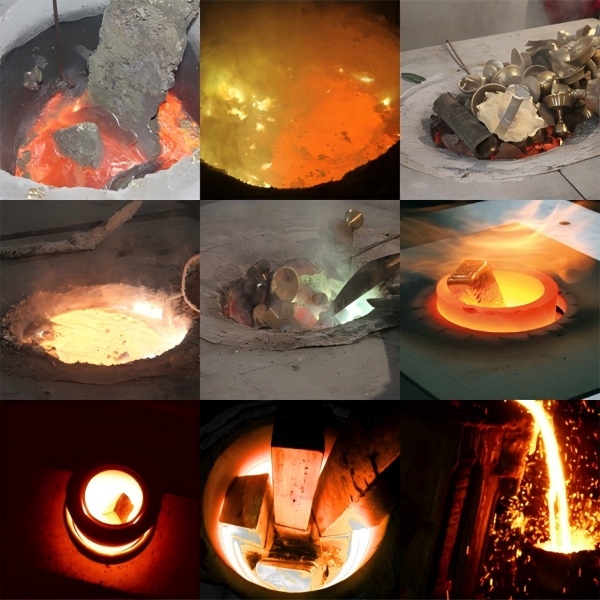
    how-to-choose-the-right-induction-melting-furnace-for-non-ferrous-metals.jpg

    How Does Induction Heating Behave With Non-Ferrous Metals?

    Material conductivity affects the interaction between the induction field and the metal charge.

    When planning induction heating non ferrous metals, the equipment supplier should understand the alloy composition, charge size, target temperature, and desired melt cycle.

    Highly conductive metals can respond differently from ferrous materials, especially during the early stage of heating.

    In some furnace designs, energy can also be transferred through a conductive crucible, depending on the metal, power range, and system configuration.

    For this reason, generator power, operating frequency, furnace body, and crucible should be engineered as one complete melting system.

    What Furnace Capacity Should You Choose?

    Capacity should follow the quantity of molten metal the production line actually needs.

    A foundry that consumes 100 kg every 40 minutes may gain little from producing several hundred kilograms in one heat if the additional metal must remain at temperature while waiting for molds.

    Selection FactorInfluence on Furnace Choice
    Metal required per pourEstablishes useful batch size
    Melting cycles per shiftDetermines required throughput
    Starting charge conditionInfluences total melting time
    Alloy typeChanges thermal and electrical demand
    Pouring temperatureAffects total energy requirement
    Alloy-change frequencyInfluences desired flexibility
    Holding timeAffects oxidation and energy consumption
    Expected growthDetermines sensible capacity reserve

    Capacity should provide enough margin for normal variation without creating excessive molten-metal inventory.

    Where Does an Induction Metal Melting Furnace Offer an Advantage?

    An induction metal melting furnace provides controllable electrical heat without relying on direct combustion around the melt.

    This can make it easier to regulate the heating process and integrate the furnace into a controlled production environment.

    However, induction technology does not automatically guarantee high metal quality.

    Charge cleanliness, crucible condition, pouring practice, temperature control, dross removal, and holding time remain important. If the molten metal is overheated or left at temperature unnecessarily, oxidation and alloy loss can still increase.

    The quality advantage comes from better process control rather than simply replacing one heat source with another.

    Should You Choose a Coreless or Channel Furnace?

    A coreless induction furnace is generally suitable for batch-oriented melting where the furnace is charged, melted, tapped, and prepared for another heat.

    This can be useful for foundries that process changing order quantities or several alloy grades.

    Channel furnaces are more closely associated with operations where molten metal needs to be held continuously for long production periods.

    The choice therefore depends on how metal moves through the plant. A jobbing foundry producing many different alloys may place greater value on flexibility, while a high-volume plant running one alloy continuously may have different priorities.

    How Should Frequency Be Selected?

    The correct induction furnace frequency depends on furnace size, alloy properties, charge geometry, and intended power density.

    Frequency influences electromagnetic penetration and bath behavior, so it should not be selected independently from the furnace and metal load.

    A small aluminum furnace and a larger copper furnace may require different electrical strategies even if both are induction melting systems.

    The more useful approach is to provide the supplier with the alloy, charge weight, desired melting time, furnace capacity, and local electrical conditions. Frequency can then be matched to the real production requirement.

    How Important Is Crucible Compatibility?

    Crucible selection directly affects reliability, contamination risk, and operating cost.

    The crucible material needs to tolerate the required temperature while remaining compatible with the molten alloy.

    Graphite crucibles are commonly used in a range of non-ferrous applications, but the final selection depends on furnace design and metal chemistry.

    Copper and aluminum do not impose identical thermal or chemical loads. A crucible exposed to repeated rapid heating and cooling can also experience greater thermal stress than one operating under a more stable cycle.

    Crucible life should therefore be evaluated in relation to the production process rather than treated as a fixed number of heats.

    Can One Furnace Melt Aluminum and Copper?

    It may be technically possible for one power system to support more than one metal, but switching between aluminum and copper requires careful evaluation.

    Copper needs a significantly higher melting temperature, while crucible selection and electrical matching can also differ.

    Cross-contamination is another concern when alloy chemistry must remain tightly controlled.

    A plant that frequently changes between very different metals may achieve better reliability with dedicated crucibles or interchangeable furnace bodies instead of repeatedly cleaning the same melting chamber.

    How Can Dross and Metal Loss Be Reduced?

    Temperature control is one of the most important measures.

    Operators should not continue heating simply because additional generator power is available. Once the metal reaches the validated pouring range, unnecessary superheating adds thermal exposure without increasing useful output.

    For aluminum, excessive bath disturbance and long holding time can contribute to oxide formation. For brass and other zinc-containing alloys, excessive temperature can increase zinc loss and fume generation.

    The melting furnace should therefore be synchronized with mold preparation and downstream handling so that liquid metal is poured without unnecessary delay.

    Conclusion

    The right non-ferrous induction melting furnace is not simply the model with the largest crucible or highest generator power. The most suitable system matches alloy properties, batch size, melt rate, crucible material, frequency, temperature control, and production rhythm. When these factors are considered together, the furnace can provide more stable metal quality while reducing unnecessary holding, oxidation, and operating cost.

    FAQ

    1.Can one induction melting furnace be used for several non-ferrous alloys?

    Potentially yes, but alloy temperature, crucible compatibility, electrical matching, and contamination risk must be evaluated. Frequent alloy changes may justify dedicated crucibles or furnace bodies.

    2.What furnace capacity is best for aluminum melting?

    The correct capacity depends on metal required per pour and hourly production demand. A furnace that is much larger than downstream consumption can create unnecessary holding time and dross formation.

    3.Why does copper require different furnace sizing from aluminum?

    Copper has a substantially higher melting temperature and different electrical and thermal properties. As a result, the required power, crucible system, heating cycle, and operating conditions can differ significantly from an aluminum melting application.

    References
    Related Induction Heating Machines Offered By JKZ
    Related News