The correct induction furnace capacity should be based on the amount of liquid steel needed per heat and the rate at which downstream production can consume it. A furnace that is too small creates frequent melting cycles and production delays, while an oversized furnace can increase investment, holding time, refractory load, and energy use. The best selection therefore combines useful heat size, required melt rate, casting yield, power rating, and the actual operating rhythm of the foundry.
What Does Induction Furnace Capacity Actually Mean?
Nominal furnace capacity describes the quantity of metal the furnace is designed to handle under specified operating conditions. It should not be treated as identical to finished casting output.
For a steel melting furnace, production planning must account for casting yield. The metal poured into runners, gates, test samples, or other non-saleable sections means the quantity of liquid steel required is usually greater than the weight of finished castings.
A production batch requiring 400 kg of acceptable castings at an expected yield of 80 percent will require approximately 500 kg of liquid steel before any additional operating allowance is considered.
This simple distinction prevents one of the most common errors in furnace sizing.
Should Capacity Be Based on Batch Weight or Daily Output?
Batch weight is generally the more useful starting point because daily tonnage alone does not describe how production is organized.
A plant producing three tons of castings per day may operate through many small heats or a few large heats. The correct arrangement depends on mold size, order mix, alloy changes, staffing pattern, and downstream casting capacity.
| Production Variable | Influence on Furnace Selection |
|---|
| Metal required per pour | Defines minimum useful heat size |
| Casting yield | Determines total liquid steel requirement |
| Heats per shift | Influences melt cycle frequency |
| Melt time | Determines hourly throughput |
| Alloy changes | May favor smaller, flexible batches |
| Holding time | Influences energy use and metal condition |
| Molding capacity | Sets practical molten-metal demand |
| Expansion plan | Determines suitable future margin |
The furnace should therefore be sized around the casting process rather than considered as an isolated melting unit.
Which Furnace Design Matches the Production Pattern?
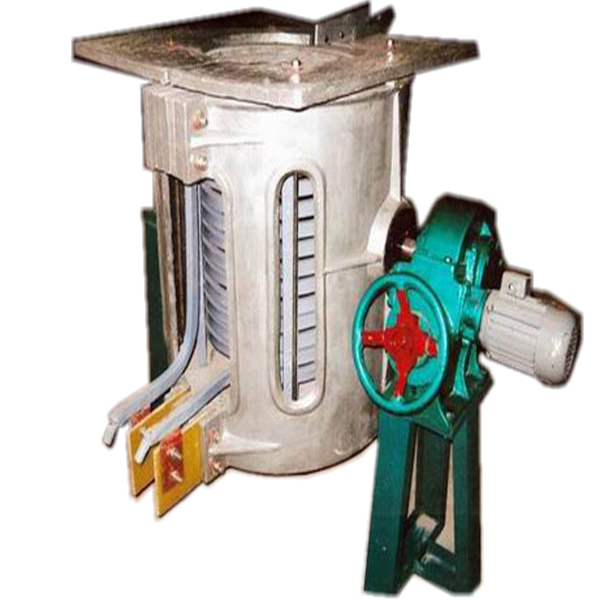
Understanding the available types of induction furnace helps clarify which capacity strategy is appropriate.
Coreless furnaces are widely associated with batch melting because they allow a heat to be melted, tapped, and followed by another batch. Channel furnaces follow a different operating pattern and are more closely suited to applications where continuous metal holding is important.
Neither design is universally better. The production schedule determines which arrangement provides more value.
Why Is a Coreless Furnace Common for Steel Melting?
A coreless induction furnace can provide useful flexibility for foundries processing different heat sizes or steel grades.
The metal charge becomes part of the electromagnetic load inside the coil-surrounded furnace body. This allows rapid electrical heating without the combustion environment associated with conventional fuel-fired melting.
Capacity alone, however, does not define production performance. Power density, furnace geometry, refractory condition, cooling performance, and melt schedule all influence how quickly a nominal furnace capacity can be processed.
Two furnaces with the same kilogram rating may therefore deliver very different hourly output.
How Does Power Rating Affect Furnace Capacity?
Capacity describes how much steel the furnace can handle, while power strongly influences how quickly the charge can be melted and brought to the tapping temperature.
A foundry may therefore have sufficient nominal capacity but still fail to meet its production target because the melting cycle is too long.
Purchasing specifications should define both the required kilograms per heat and the required kilograms per hour. These two numbers allow the supplier to evaluate whether furnace volume and power are properly matched.
Increasing power is not always the only solution. Charging method, starting material size, production sequence, and desired superheat also influence total cycle time.
Does Induction Furnace Frequency Matter?
Induction furnace frequency affects electromagnetic penetration, bath behavior, and how electrical energy is transferred into the metal load.
The appropriate frequency depends partly on furnace size and charge characteristics.
A frequency used successfully on a small furnace should not automatically be specified for a much larger installation. The furnace manufacturer should evaluate capacity, power, melt time, and metal properties together before selecting the final electrical configuration.
Why Can an Oversized Furnace Increase Operating Cost?
Buying extra furnace capacity can appear to provide useful flexibility for future expansion. The disadvantage is that a large furnace operated repeatedly at a small fraction of its intended working capacity may not provide the expected economic benefit.
Higher installed capacity normally involves more refractory mass, greater cooling demand, and higher capital investment. If the molding line cannot consume the full heat, molten steel may also remain in the furnace longer than necessary.
Extended holding consumes energy without increasing casting output and keeps the refractory exposed to high temperature.
A reasonable growth margin is useful, but it should be based on realistic expansion plans.
How Does Melting Loss Affect Capacity Planning?
Reducing melting loss in induction furnace is part of achieving a good cost per ton.
Charged weight does not always become usable poured metal. Excessive holding, overheating, inappropriate charging practice, and poor synchronization between melting and molding can all reduce the economic value of the melt.
A high-capacity furnace that produces steel significantly faster than downstream operations require may therefore create avoidable holding time.
The most efficient production schedule aims to have the required amount of liquid steel ready close to the time the molds are prepared for pouring.
Is One Large Furnace Better Than Two Smaller Furnaces?
The answer depends on production mix and operational priorities.
One large furnace can simplify infrastructure and may suit plants processing the same steel grade continuously. Two smaller furnaces can improve scheduling flexibility, allow one furnace to melt while another is being poured, and provide some redundancy during maintenance.
The tradeoff is higher installation complexity because each additional unit adds electrical, cooling, control, and maintenance requirements.
Capacity planning should therefore evaluate line flexibility and production continuity rather than comparing total kilograms alone.
Conclusion
The correct induction furnace capacity is the capacity that keeps melting and casting synchronized. Heat size, casting yield, melt rate, power, frequency, holding time, and downstream mold availability should all be considered together. Selecting a furnace around actual production demand reduces both shortages of molten steel and the cost of maintaining unnecessary capacity.
FAQ
1.How do I calculate the furnace capacity needed for steel casting?
Start with the liquid steel required for each production batch rather than finished casting weight alone. Adjust for casting yield and then evaluate how many heats must be completed within each shift.
2.Does a larger furnace always reduce steel melting cost?
No. A larger furnace can reduce the number of heats, but if the casting line cannot consume the metal efficiently, longer holding time and higher installed cost can offset the benefit.
3.Is furnace capacity more important than power?
They must be evaluated together. Capacity determines the amount of steel handled per heat, while power strongly influences how quickly that heat can be melted.
 en
en  cn
cn  jp
jp  ko
ko  de
de  es
es  it
it  ru
ru  pt
pt  th
th  vi
vi  pl
pl 



 Call us on:
  Email Us:
  NO. 688th South Baoguang Road, Xindu District, Chengdu City, Sichuan Province, China