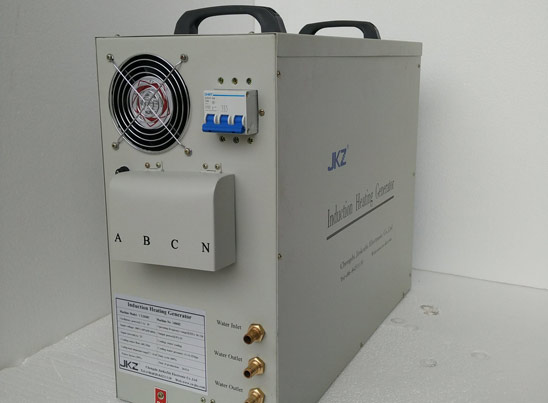
Manufacturers are increasingly replacing conventional flame, resistance, and furnace heating with high frequency induction heating machine solutions because they offer faster heating cycles, precise temperature control, lower energy consumption, improved product consistency, and seamless integration with automated production lines. Whether used for brazing, hardening, forging, annealing, or shrink fitting, modern induction systems deliver higher productivity while reducing operating costs and quality defects.
Why Are High Frequency Induction Heating Machines Becoming the Preferred Choice?
Industrial manufacturers are under constant pressure to improve throughput, reduce energy consumption, and maintain consistent product quality. A high frequency induction heating machine addresses these challenges through localized, non-contact heating.
Unlike traditional heating methods that warm an entire component, induction heating generates heat directly inside the workpiece using electromagnetic induction. This significantly reduces wasted energy while shortening production cycles.
Key advantages include:
Heating efficiency above traditional resistance or flame heating
Extremely fast heat-up times (often within seconds)
Minimal oxidation and decarburization
Excellent temperature repeatability
Reduced labor costs through automation
Cleaner and safer working environments
Lower maintenance requirements
These advantages make induction heating suitable for both high-volume manufacturing and precision production.
What Industries Benefit Most from High Frequency Induction Heating?
Modern induction technology supports a wide variety of industrial applications.
Automotive Manufacturing
Aerospace
Precise temperature control minimizes metallurgical distortion while maintaining strict material specifications.
Metal Processing
Manufacturers use induction systems for:
Annealing
Forging preparation
Pipe heating
Bar end heating
Billet heating
Electronics Manufacturing
The ultra high frequency induction heating machine is especially suitable for:
Its small heating zone minimizes thermal damage to surrounding materials.
How Does High Frequency Improve Heating Precision?
Heating frequency directly influences heating depth.
Higher frequencies produce shallower heat penetration, making them ideal for:
Surface hardening
Precision brazing
Thin-wall tubing
Small metal components
Electronic connectors
For manufacturers requiring extremely localized heating, an ultra high frequency induction heating machine offers exceptional process control while maintaining rapid cycle times.
Benefits include:
Uniform surface hardness
Reduced material deformation
Better dimensional accuracy
Improved product consistency
Less post-processing
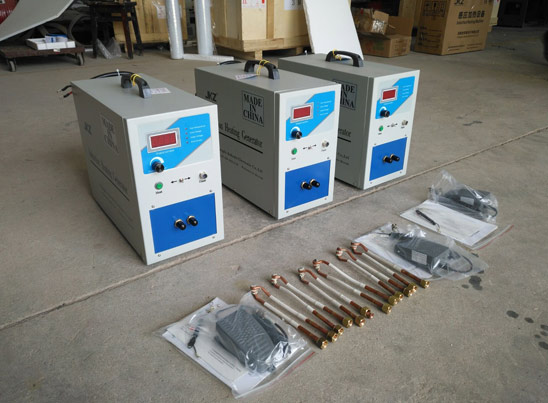
How Does a High Frequency Induction Heating Machine Reduce Manufacturing Costs?
Although the initial equipment investment may be higher than conventional heating equipment, lifecycle operating costs are significantly lower.
Major cost-saving factors include:
Lower Energy Consumption
Heat is generated directly within the workpiece instead of heating surrounding air or furnace chambers.
Reduced Material Waste
Accurate heating minimizes:
Overheating
Surface scaling
Oxidation
Scrap rates
Less Maintenance
Modern solid-state power supplies eliminate many wear-prone components found in traditional heating equipment.
Increased Production Speed
Short heating cycles improve equipment utilization and overall production capacity.
For continuous production lines, productivity improvements often justify equipment investment within a relatively short period.
What Should You Consider When Selecting the Right Induction Heating Power?
Power selection depends on:
Material type
Workpiece size
Required heating depth
Production speed
Target temperature
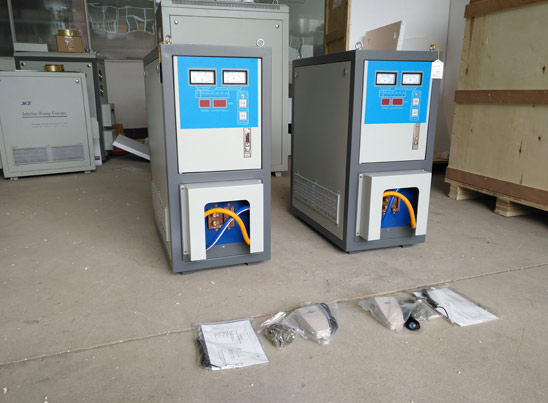
For medium-sized industrial applications, a high frequency induction heating machine 30kw provides an excellent balance between efficiency and flexibility.
Typical applications include:
Larger production environments often require greater power output.
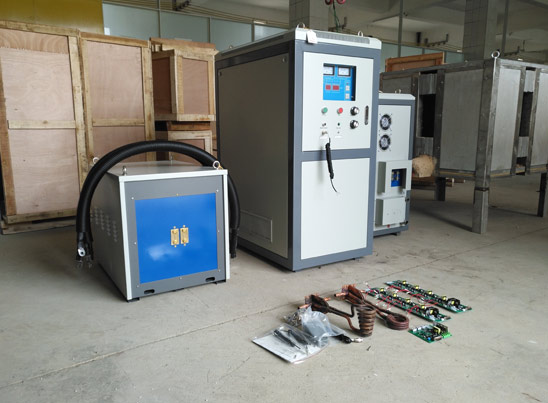
A high frequency induction heating machine 50kw supplier can provide equipment capable of:
Selecting the correct power configuration helps maximize productivity while avoiding unnecessary energy consumption.
What Is the Role of a High Frequency Induction Heating Machine Module?
Modern equipment is increasingly designed around modular architecture.
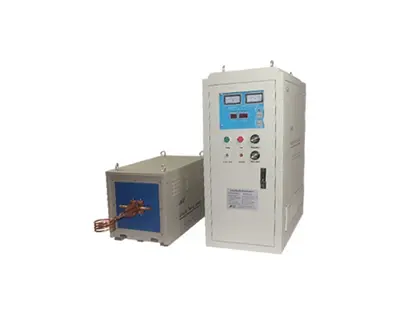
A high frequency induction heating machine module serves as the core power conversion unit responsible for generating stable high-frequency electrical output.
Advantages of modular design include:
Manufacturers operating multiple production lines often prefer modular systems because they reduce equipment downtime and simplify inventory management.
Why Does Equipment Quality Depend on the Manufacturer?
Performance is influenced not only by power output but also by engineering design, component quality, and after-sales technical support.
A professional high frequency induction heating machine manufacturer typically provides:
Customized induction coil design
Process optimization support
Equipment commissioning
Operator training
Long-term spare parts supply
Remote technical assistance
Experienced manufacturers also help customers optimize heating parameters for specific materials and production processes.
How Can a Reliable Supplier Improve Your Production Efficiency?
Choosing an experienced high frequency induction heating machine supplier provides benefits beyond equipment purchasing.
An industrial supplier should offer:
Application evaluation
Heating sample testing
Customized automation integration
Cooling system recommendations
Process parameter optimization
Long-term maintenance support
Reliable suppliers understand different manufacturing industries and can recommend equipment configurations that match production objectives instead of simply selling higher-power machines.
Is High Frequency Induction Heating Suitable for Automated Production Lines?
Yes. One of the strongest advantages of induction heating is its compatibility with automation.
Modern systems can integrate with:
PLC control systems
Robotic handling equipment
CNC machining centers
Conveyor production lines
Vision inspection systems
MES manufacturing systems
Automation delivers:
Consistent heating quality
Reduced operator intervention
Higher production efficiency
Better process traceability
Lower labor costs
This makes induction heating particularly valuable in Industry 4.0 manufacturing environments.
Conclusion
As manufacturing continues moving toward automation, energy efficiency, and higher quality standards, the high frequency induction heating machine has become one of the most effective industrial heating technologies available. From precision brazing and surface hardening to automated production lines, induction heating offers measurable improvements in efficiency, product consistency, and operating costs.
Whether your application requires a compact high frequency induction heating machine 30kw, a high-capacity solution from a high frequency induction heating machine 50kw supplier, or an ultra high frequency induction heating machine for precision processing, partnering with an experienced high frequency induction heating machine manufacturer and trusted high frequency induction heating machine supplier ensures that your investment delivers long-term performance, reliability, and production value.
FAQ
What is a high frequency induction heating machine used for?
It is widely used for brazing, surface hardening, annealing, forging, shrink fitting, soldering, welding, and other localized heat treatment processes across automotive, aerospace, machinery, electronics, and metalworking industries.
What is the difference between high frequency and ultra high frequency induction heating?
High-frequency systems are suitable for general industrial heat treatment and brazing, while ultra high frequency induction heating machine models provide shallower heating depth and greater precision for small components and delicate applications.
Is a 30kW induction heating machine sufficient for industrial production?
A high frequency induction heating machine 30kw is suitable for many medium-duty industrial applications, including shaft hardening, tool heat treatment, pipe brazing, and precision metal heating. Larger parts or continuous heavy-duty production may require higher power.
Why choose a modular induction heating system?
A high frequency induction heating machine module simplifies maintenance, improves system reliability, enables flexible upgrades, and minimizes production downtime through quick component replacement.
How do I choose a reliable induction heating machine supplier?
Look for a high frequency induction heating machine supplier with proven manufacturing experience, engineering support, customized coil design capabilities, comprehensive testing services, global technical support, and a strong track record in industrial induction heating applications.
 en
en  cn
cn  jp
jp  ko
ko  de
de  es
es  it
it  ru
ru  pt
pt  th
th  vi
vi  pl
pl 




 Call us on:
  Email Us:
  NO. 688th South Baoguang Road, Xindu District, Chengdu City, Sichuan Province, China