Modern automotive production demands unprecedented levels of precision, efficiency, and repeatability - requirements perfectly addressed by induction heating for automotive manufacturing. From engine components to structural elements, induction technology has emerged as the thermal processing method of choice for manufacturers committed to excellence in an increasingly competitive industry.
Precision Thermal Control for Critical Components
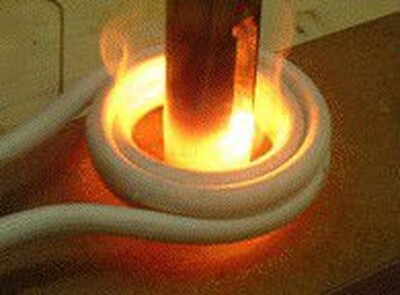
The application of induction heating for automotive manufacturing has revolutionized how crucial vehicle components receive heat treatment. Engine valve seats benefit from localized hardening that extends service life without distorting the cylinder head. Transmission gears achieve perfect case depth consistency across complex tooth geometries. Constant-velocity joints undergo precise tempering processes that balance hardness with impact resistance. This surgical precision stems from induction's unique ability to focus electromagnetic energy exactly where needed, a capability that traditional heating methods simply cannot match. JKZ's ISO-certified systems maintain this precision throughout years of continuous production, ensuring every component meets exacting OEM specifications.

The Thermal Processing Crossroads
The contrast between conventional heat treatment approaches and modern induction heating for automotive manufacturing reveals compelling advantages:
Where atmospheric furnaces require lengthy heating cycles that create production bottlenecks, induction systems process components in seconds with immediate quenching capability. While flame hardening struggles with uniformity on complex parts, induction automatically adapts to component geometry through intelligent coil designs. Most critically, traditional methods often introduce undesirable thermal stresses and distortion, requiring additional machining operations, while induction's localized heating minimizes these issues - particularly valuable for precision transmission components and safety-critical steering elements. The production line impact becomes clear when comparing throughput: induction typically processes components 5-10 times faster than conventional alternatives while delivering superior metallurgical results.

Advanced Process Integration for Smart Factories
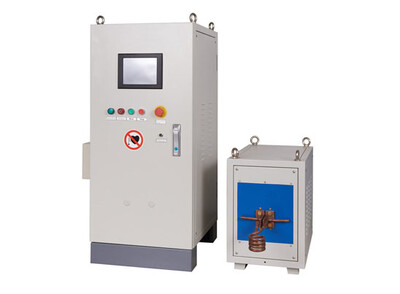
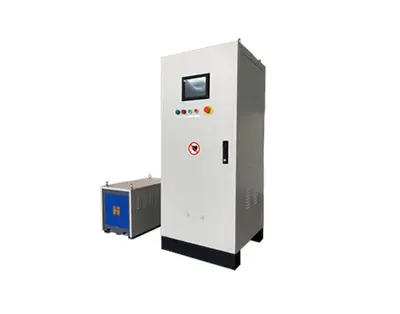
Contemporary automotive plants benefit tremendously from how induction heating for automotive manufacturing seamlessly integrates with automated production systems. JKZ's solutions incorporate Industry 4.0 capabilities including real-time process monitoring, automatic parameter adjustment, and full data logging for quality traceability. Intelligent frequency converters automatically optimize power delivery for different component geometries, while integrated robotics handle part loading and unloading with precision timing. These features enable induction systems to serve as fully networked nodes within smart factories, contributing to the lean manufacturing goals that define world-class automotive production. The technology's compact footprint and rapid cycling capabilities make it particularly valuable in space-constrained production environments where floor space equals significant cost.

Sustainability Advantages in Mass Production
The automotive sector's intensifying focus on sustainability finds a powerful ally in induction heating for automotive manufacturing. Compared to gas-fired furnaces or salt baths, induction systems reduce energy consumption by up to 60% while eliminating greenhouse gas emissions at the point of use. The nearly instantaneous heating process minimizes standby energy losses that plague continuous furnaces. Closed-loop water cooling systems maintain high efficiency while preventing thermal energy waste. When multiplied across the millions of components processed annually in automotive plants, these environmental benefits become substantial - helping manufacturers meet increasingly stringent carbon reduction targets while simultaneously lowering operational costs.
With CE-certified equipment backed by thirty years of industry leadership, JKZ Induction Heating provides automakers with reliable, high-performance thermal processing solutions.

 en
en  cn
cn  jp
jp  ko
ko  de
de  es
es  it
it  ru
ru  pt
pt  th
th  vi
vi  pl
pl 


 Call us on:
  Email Us:
  NO. 688th South Baoguang Road, Xindu District, Chengdu City, Sichuan Province, China